

When faced with challenges from every direction, how are leaders really feeling about transformation?
Get the report
The transformation agenda
Our research shows that leaders are facing challenges from every direction – strategic, operational, technological, financial and regulatory. But among these challenges lies an opportunity to prioritise and focus on what matters most.
Fragmented priorities
Leaders are facing a landscape of competing concerns, with no clear priority. Most issues cluster around the 20–30% mark, suggesting organisations are juggling multiple priorities at the same time, and that C-suite alignment around a single, overriding transformation challenge remains tough.
The people agenda is now central
The data shows a clear shift – transformation is happening in the people domain itself. People issues consistently rise to the top, appearing as leading organisations’ concerns and priorities and spanning both short- and long-term horizons. People are no longer just enablers of transformation, but a primary focus.
The focus is shifting inward
While external shocks like economic uncertainty and competitive pressure still register, they’re being outpaced by internal readiness concerns. Organisations are looking less at what competitors are doing and more at how they can build the internal muscle to lead change from within.
AI stands alone in the technology conversation
We’re seeing broader digital concerns largely become business-as-usual. AI stands out as the disruptive force enabled by data and technology, with its rapid evolution creating both urgency and uncertainty for leaders.
When Everything’s a Priority, Nothing Is
With challenges seemingly everywhere they turn, leaders are struggling to determine where to focus their attention.
Our research found that transformation priorities show no clear frontrunner. Every priority sits tightly between 19–24%, indicating that organisations aren’t rallying around one dominant theme. Leaders are attempting to build transformation momentum across multiple fronts, rather than concentrating efforts in priority areas.
Such a narrow spread of responses reflects the complexity leaders are facing. Many are trying to tackle too much at once and struggling to make a meaningful difference.
When everything competes for attention, progress stalls and transformations fail.
“In the face of complex priorities, adaptability must rise to the top”
The transformation mindset is evolving
Traditionally seen as a one-off overhaul of systems, structures or strategy, transformation is now increasingly being viewed as continuous evolution, particularly among leading organisations.
34% of these leaders define transformation as continuous improvement at scale (compared to just 21% of lagging organisations).
This shift matters. Viewing transformation as ongoing reflects a deeper understanding of what it takes to make change stick. It’s about treating transformation as a continuous cycle of learning and adjusting, refining processes, aligning cultures and building resilience.
The importance of adaptability
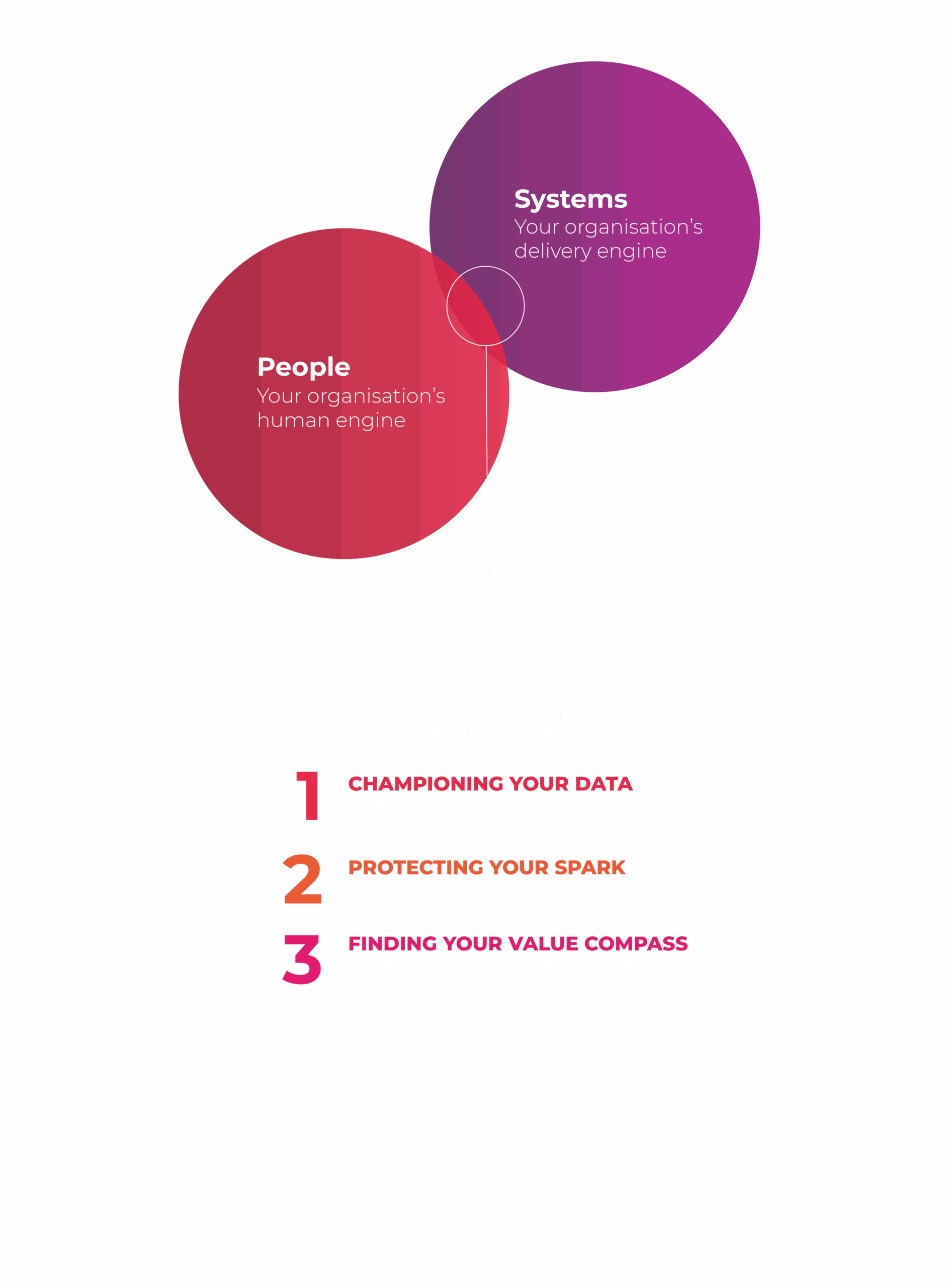
Organisations are facing a wall of competing priorities – and trying to do it all is slowing them down. The most successful organisations focus on what matters, protect their team’s energy and build the internal structures to adapt. That’s where adaptability comes in. It’s not just about reacting to change – it’s a strategic capability that shows up in how you think, invest and lead. And it’s built across your systems and your people.

Organisations are facing a wall of competing priorities – and trying to do it all is slowing them down. The most successful organisations focus on what matters, protect their team’s energy and build the internal structures to adapt. That’s where adaptability comes in. It’s not just about reacting to change – it’s a strategic capability that shows up in how you think, invest and lead. And it’s built across your systems and your people.
Ready to discover how the C-Suite are embracing and succeeding in transformative change?
Get the report
